

The Benefits of Early ADHD Assessment: Understanding the Whole Person
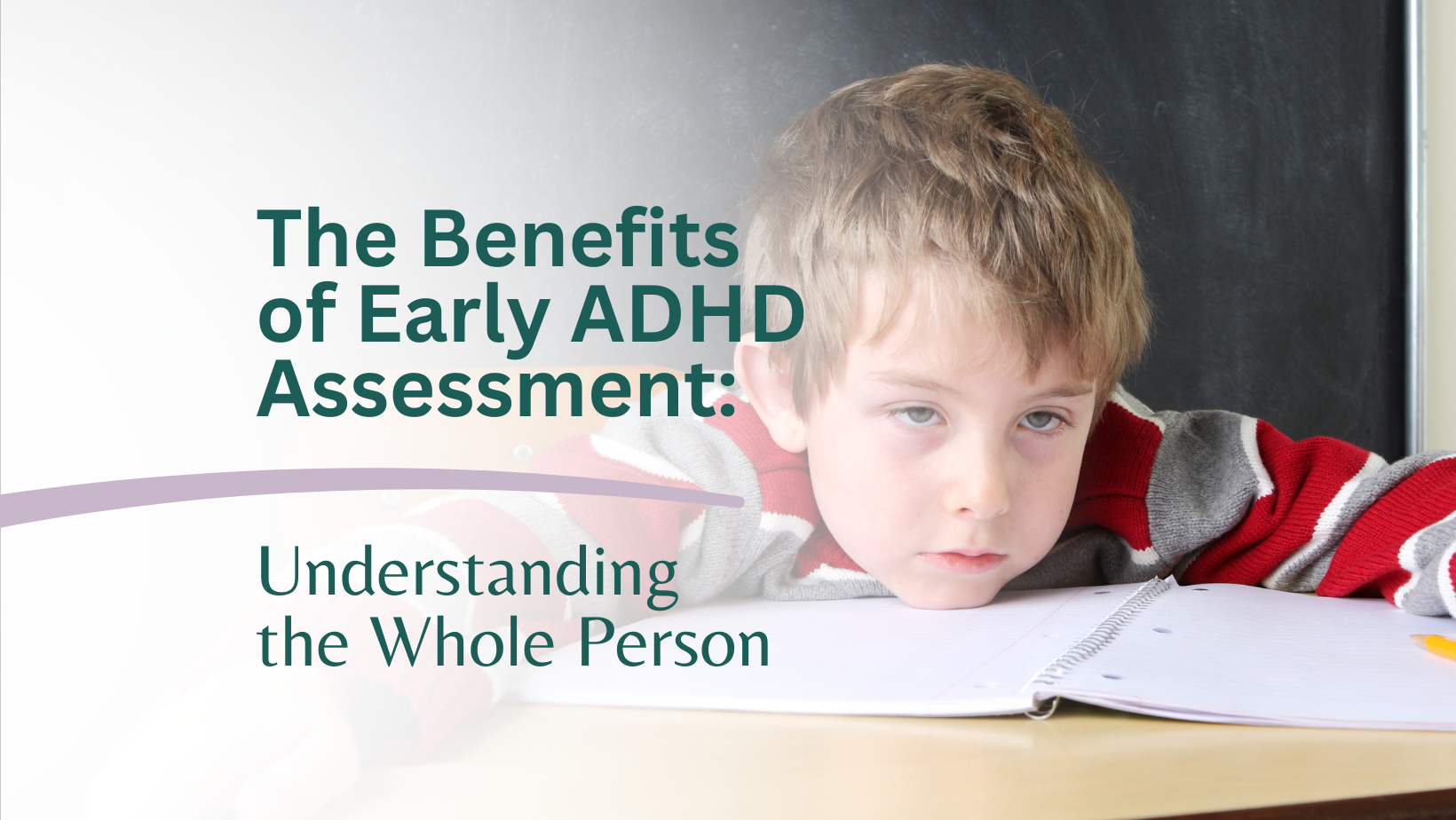
When people hear ADHD, they often picture a child who is hyperactive, impulsive, or unable to pay attention.
But ADHD is much more complex than that.
ADHD can affect attention, impulses, emotions, organization, time management, and other executive functioning skills. It can look very different from person to person, and symptoms can change as children grow into teens and adults.
For many people with ADHD, the most difficult part isn't always the symptoms themselves. It's the story they may begin to tell themselves because of those struggles.
"I'm lazy."
"I don't try hard enough."
"Why is everything so much harder for me?"
Early assessment can provide something incredibly important: understanding.

ADHD Doesn't Always Look the Way We Expect
ADHD doesn't always look "hyper."
Some children, particularly girls, may appear quiet, daydreamy, forgetful, or disorganized. Their challenges can be easier to miss because they aren't necessarily disruptive or outwardly restless.
ADHD can also look different at different ages. A young child may struggle with physical restlessness or following directions, while a teenager may struggle more with procrastination, time management, organization, or getting started on tasks.
Adults may experience many of these same challenges in different ways.
This is why understanding the whole picture matters.
When Should You Consider an ADHD Evaluation?
Everyone experiences forgetfulness, distraction, procrastination, or difficulty staying organized from time to time. These things alone don't necessarily indicate ADHD.
An evaluation may be worth considering when challenges are persistent, interfere with everyday life, and occur across more than one setting.
For a child, difficulties may be noticeable both at home and at school. For an adult, they may show up at work, at home, or in relationships.
It's also important to consider the impact these challenges are having.
Is homework taking hours? Are deadlines consistently missed? Are things constantly being lost? Does your child feel like they're always getting in trouble? Do you or your child feel chronically overwhelmed despite trying very hard?
Sometimes the question becomes:
"Why is this so hard?"
If you've already tried reminders, organizational strategies, extra support, or simply "trying harder," it may be worth understanding what's underneath the difficulty.

An Evaluation Is About More Than a Diagnosis
ADHD testing isn't simply about confirming whether someone has ADHD.
A comprehensive evaluation should also consider other factors that can sometimes look similar to ADHD, including anxiety, depression, learning difficulties, sleep problems, stress, and other developmental or emotional factors.
The goal isn't simply to put a label on a behavior.
The goal is to understand what's getting in the way and determine what kind of support will actually help.
For children and adults who have spent years blaming themselves for their struggles, that understanding can be incredibly meaningful.
Instead of:
"Why can't I do this?"
There can be:
"What strategies work for my brain?"
Understanding Can Reduce Shame
When someone doesn't understand why they are struggling, it's easy for them to interpret those struggles as a personal failure.
A child who consistently forgets assignments may begin to believe they're lazy. A teenager who struggles to get started on homework may think they aren't trying hard enough. An adult who has difficulty managing time or staying organized may wonder why seemingly simple tasks feel so difficult.
Understanding ADHD can help change that story.
A diagnosis doesn't define someone's intelligence, effort, or worth. Instead, it can provide a framework for understanding how their brain works and why certain strategies may be more effective.
Instead of shame, there can be self-awareness.
Instead of self-blame, there can be strategies.
The Role of Therapy in ADHD Support
An ADHD evaluation can provide valuable information, but understanding a diagnosis is only one part of the process.
Working with an independent therapist can provide children, adults, and families with emotional support as they process that information and learn how to move forward.
Therapy can also provide practical and educational tools for managing the challenges that ADHD can bring into everyday life.
For parents, understanding their child's ADHD can also change the way they respond to challenging behaviors. What may have previously looked like defiance, carelessness, or lack of motivation may be understood differently once the underlying challenges are identified.
Understanding doesn't eliminate every challenge.
But it can change how we approach those challenges.
Early Understanding Can Make a Difference
Early assessment can help children and adults develop strategies, advocate for themselves, and build on their strengths sooner—rather than spending years believing they simply aren't trying hard enough.
The earlier we understand what's happening, the sooner we can begin finding support that fits.
And sometimes, understanding yourself is the first step toward being kinder to yourself.
If you have questions about ADHD or are wondering whether an evaluation may be appropriate for you or your child, Lilac Therapy Center can help you explore your options and determine what kind of support may be appropriate. Reach out for a consultation by visiting https://lilactherapycenter.org/contact.
